
Practical reasons to call M&E Landscaping Driveways
Built for the load required
Preparation is shaped around soil, levels and the weight of the vehicles using the drive.
Drainage added before surfacing
Falls, channels and edge foundations are set in place before the finish goes down.
Access planned sensibly
We consider machinery, deliveries and spoil removal before work starts on site.
The part below the surface decides how the drive behaves
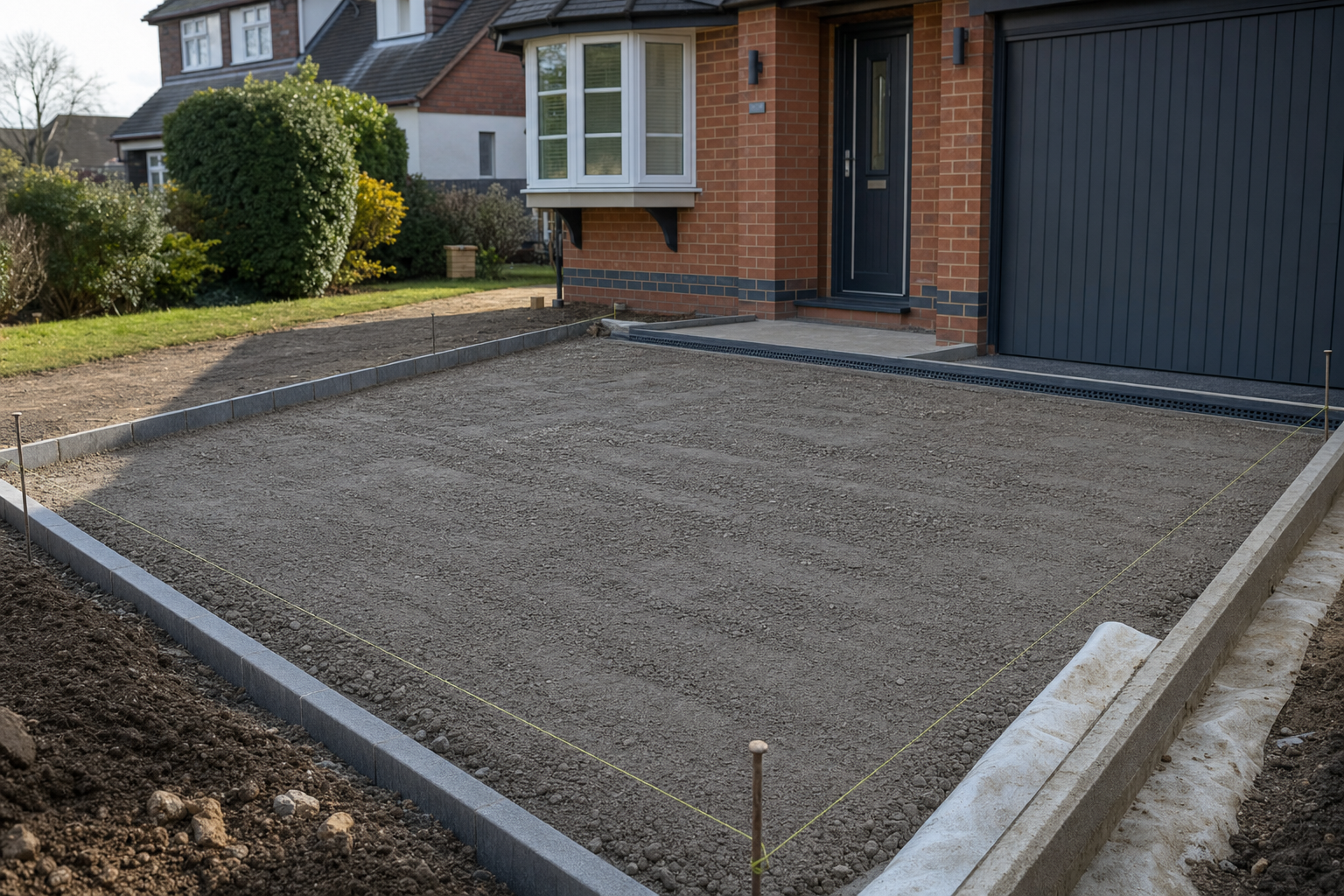
Driveway preparation is rarely the glamorous part of the job, which is probably why people sometimes underestimate it. In practice, it is what decides whether the finished surface stands up to cars, sheds water properly and stays where it was meant to stay. A plan with M&E Landscaping Driveways starts with site levels, soil conditions, drainage and the weight the driveway will need to carry. From there, we clear the site, excavate to the correct formation depth and remove unsuitable material so the build begins on something reliable. If that groundwork is skimmed over, the nice visible finish above it has a habit of becoming an expensive way of finding out what should have been dealt with first.
Depth, compaction and site logistics all matter
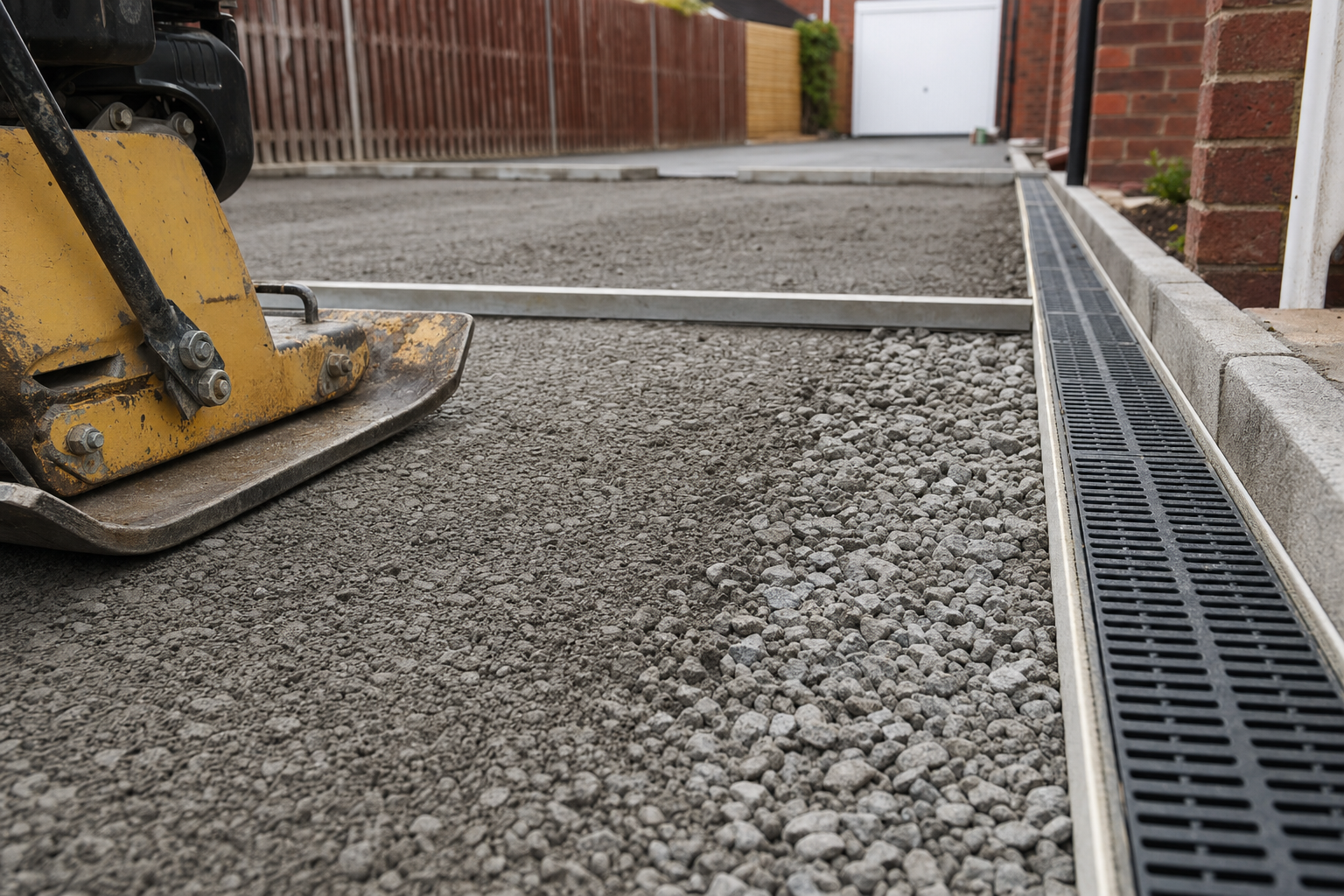
Good preparation means placing and compacting sub-base material in suitable layers, rather than dumping it in and hoping enthusiasm counts as engineering. We also incorporate the falls, drainage channels and edge foundations needed before the final surface is installed. On many properties, access is part of the challenge as much as the digging itself, so we think ahead about machinery movement, material deliveries and how excavated material will be managed in an orderly way. That practical planning helps keep the site workable and gives the driveway surface above a proper foundation, which is exactly the bit you stop seeing once it has done its job well.
Frequently asked questions
Why is driveway preparation so important?
Because the finished surface depends on it. Proper depth, sound ground, compacted sub-base and drainage detail are what help a driveway stay stable under vehicle use. If those things are not dealt with early, the surface above can start showing problems long before it should, no matter how good it looked at the start.
How deep does the excavation usually need to be?
That depends on the site levels, soil conditions, existing material and the sort of driveway being installed. There is no sensible single number for every property. We assess what is there first, then work out the preparation needed to create the right foundation for the expected use and finish.
What site factors affect the groundwork phase most?
Access for machinery, space for materials, removal of excavated spoil, drainage requirements and the existing levels all affect how the groundwork is planned. These practical points shape the job well before the visible surface is chosen, which is why the initial site review matters so much.