
Practical reasons to call M&E Landscaping Driveways
Useful for level changes
Sleepers can create steps, edging and raised sections without overcomplicating the garden.
Positioned to fit the space
Height, line and proportion are planned so sleeper features feel balanced, not bulky.
Built with drainage in mind
Raised or retaining details are planned to cope better with surrounding soil and water.
Sleepers can solve jobs that lawn and soil will not
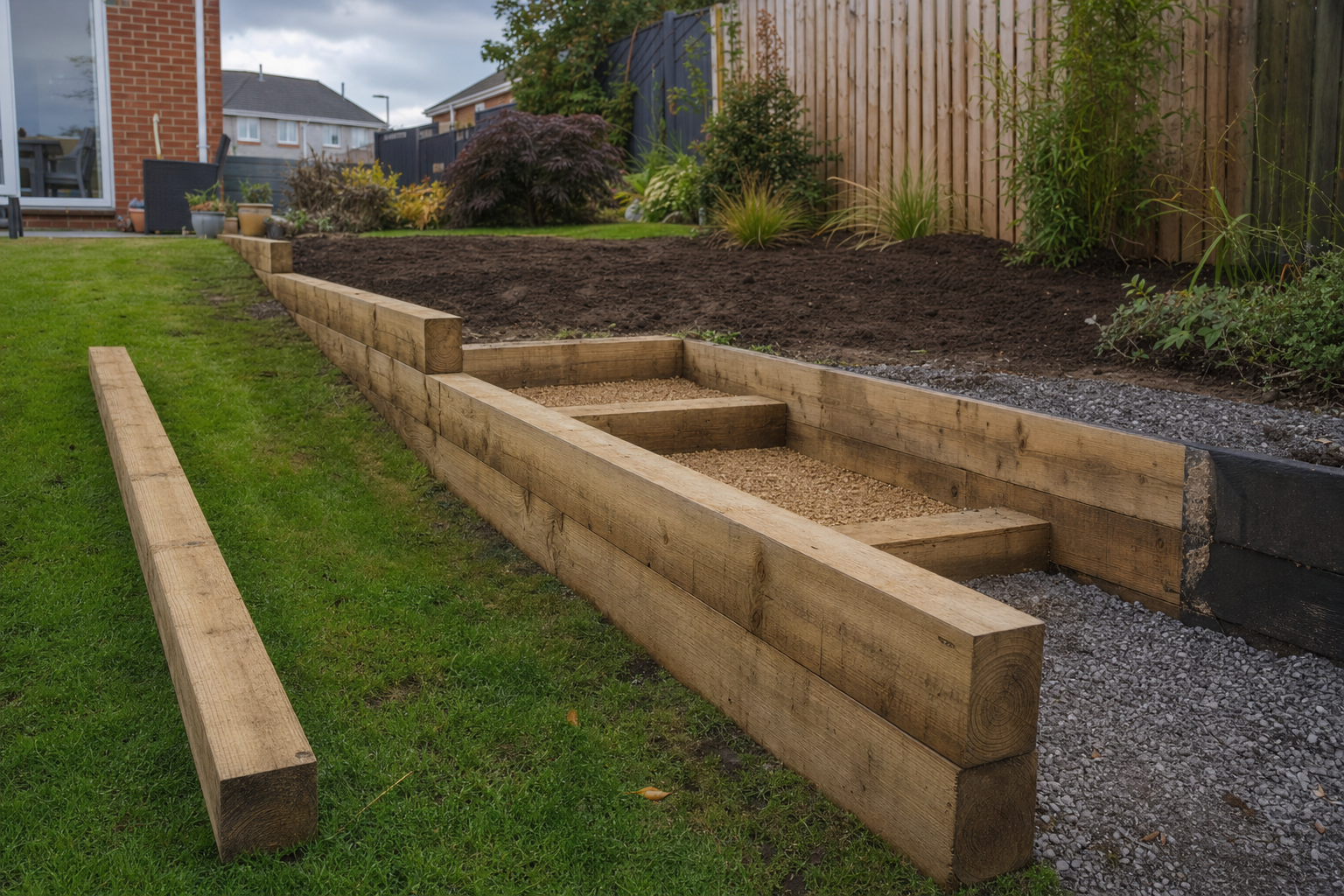
Sleepers are useful when a garden needs more definition or a level change handled properly without reaching straight for brick or concrete. They can form raised beds, create clearer lawn edges, build simple steps and separate planting areas that otherwise keep collapsing into the route people use every day. A plan with M&E Landscaping Driveways starts with height, alignment and proportion, because sleeper features need to fit the garden rather than dominate it. Too low and they do very little. Too bulky and they make the space feel boxed in. The right detail can make an awkward corner feel deliberate, which is not nothing when the corner has spent years looking like a compromise.
Fixing, anchoring and drainage matter behind the scenes
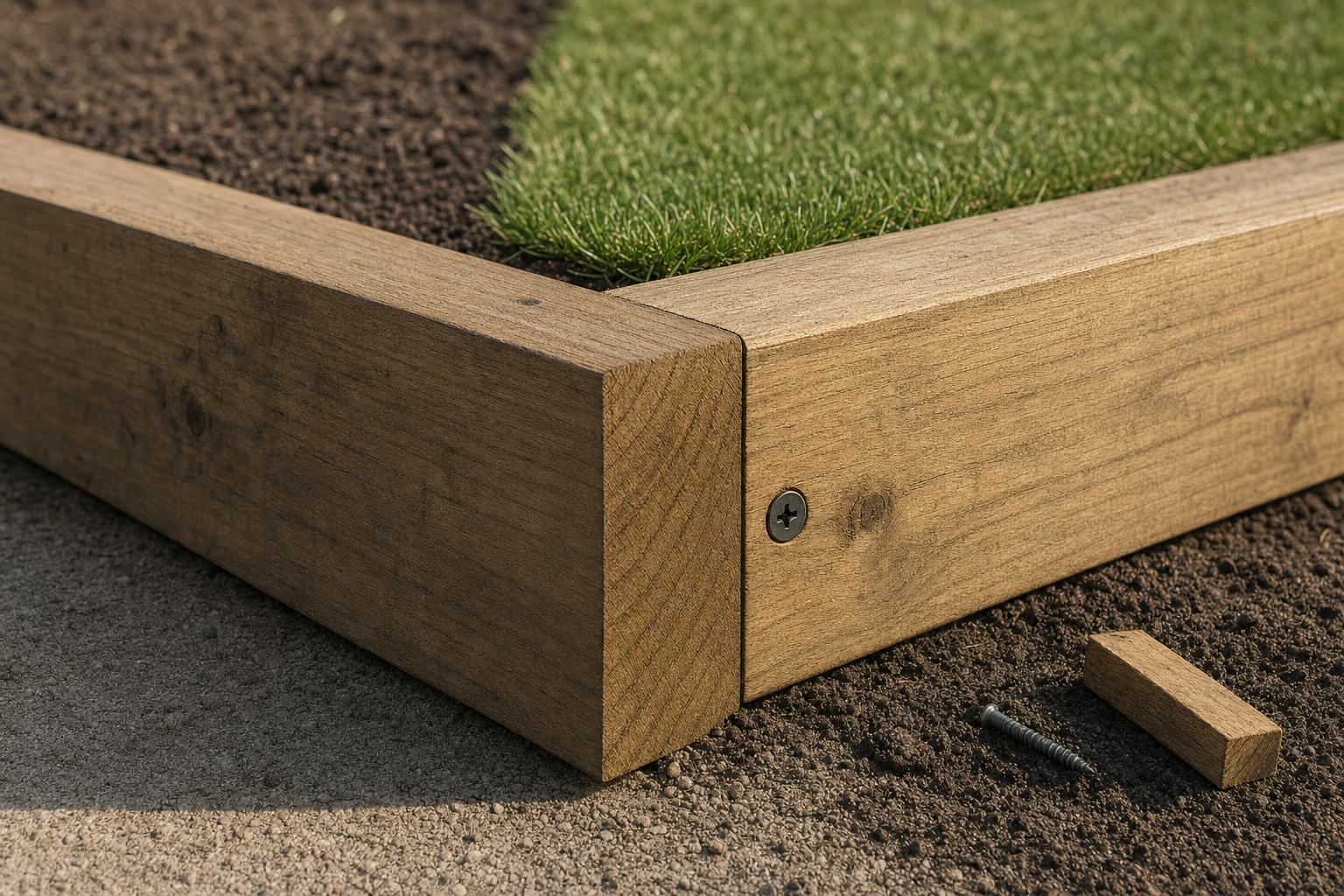
Sleepers may look straightforward, but the structure behind them matters. We think about secure fixing, anchoring and base preparation depending on whether the feature is freestanding, edging a border or helping retain a change in level. Where soil is being held back, drainage needs planning too, because trapped water can cause trouble for both the feature and the surrounding ground. Material, colour and finish also affect how the sleeper work sits alongside paving, lawn and planting. The goal is something that looks solid and useful from day one, then continues doing the job instead of leaning, shifting or turning into a soggy headache later.
Frequently asked questions
Can sleepers help retain soil in a sloping garden?
They can, provided the design, fixing and drainage are thought through properly. Retaining even a modest change in level asks more of the structure than simple edging does, so we look at the height involved, the soil around it and how water will behave behind the feature before the layout is finalised.
Are sleepers useful for more than raised beds?
Yes. They can define lawn edges, create simple steps, separate planting zones and help organise level changes around the garden. Their value is often in making a vague or difficult area feel more deliberate and easier to manage, especially where softer edges have never quite stayed where you wanted them.
What upkeep do sleeper features usually need?
That depends on the material and finish chosen, along with how exposed the feature is to moisture and general wear. Good installation, secure anchoring and sensible drainage behind the work all help. We talk through material choices and maintenance expectations so the result suits how hands-on you want to be later.