
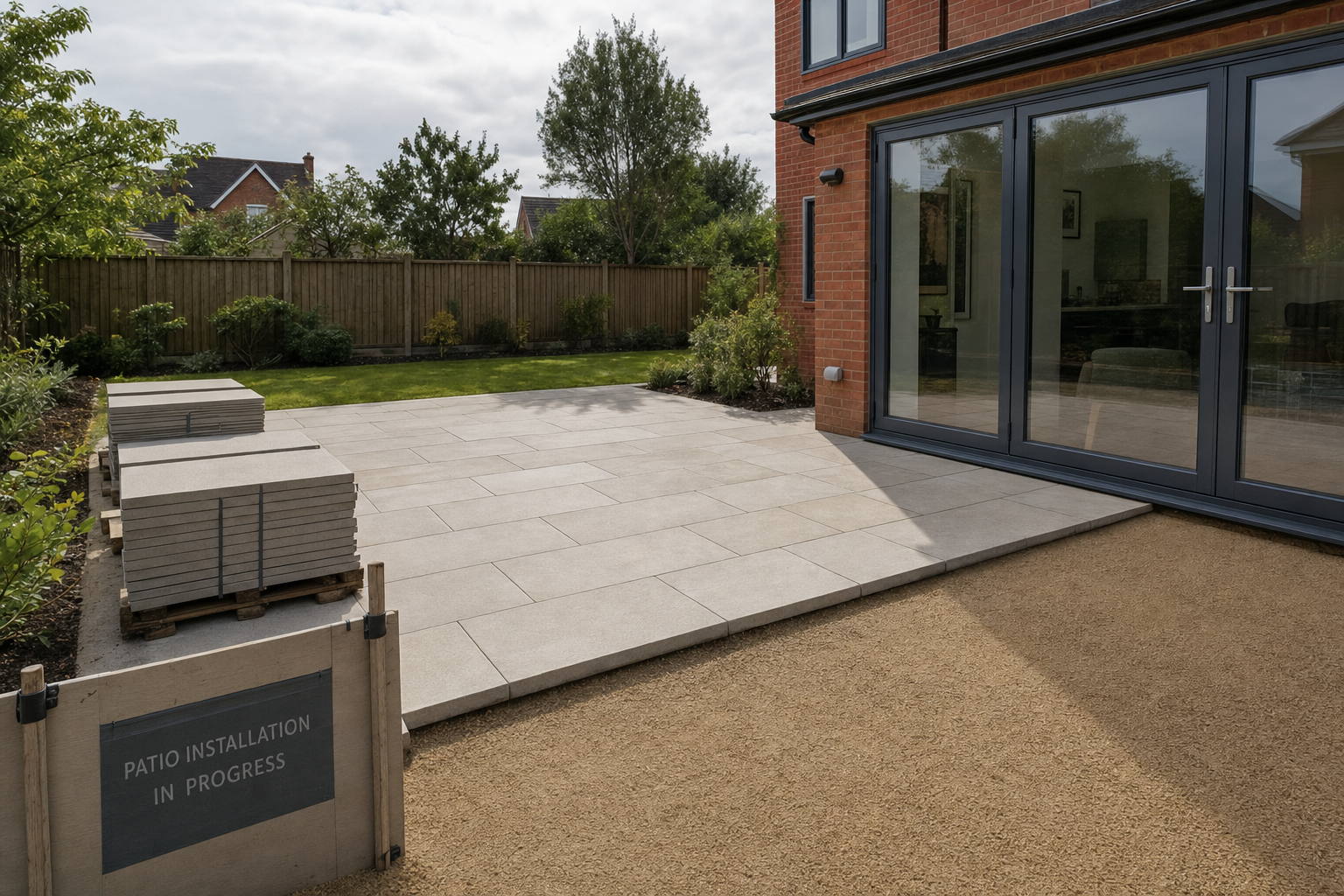
Useful detail from M&E Landscaping Driveways
Footprints shaped around use
We plan space for seats, planters and circulation instead of paving a vague rectangle.
Patterns tied to the garden
Slab formats and borders are chosen to suit the wider layout, not fight against it.
Edges handled neatly
Transitions between paving, lawn and borders are planned so the finish looks settled.
Good paving makes an underused corner earn its keep
There is usually one part of the garden that has never quite known what it is meant to be. It is too scruffy to sit in, too open to ignore and too awkwardly shaped to mow without a small grudge. Garden patio paving can turn that sort of space into a clear, usable area that connects properly to doors, lawns, borders and paths. A plan with M&E Landscaping Driveways looks at how you want to use the space first, then shapes the footprint around seating, planters, barbecues and the routes people actually walk. That way the finished area feels part of the garden, not like a hard patch dropped on top of it because there was nowhere else to put it.

Pattern, borders and preparation all play a part
The slab format and paving pattern influence how large or settled the space feels, while border details can help tie the paved area back into the rest of the garden. Underneath, we still need the practical elements to do their job: ground preparation, a sound laying bed and falls that keep water moving away instead of collecting in one gloomy corner. We also think about joint care, cleaning and the transition between paving and softer areas, because that edge is often where a patio either blends neatly into the garden or looks unresolved. The aim is a paved space that works hard without shouting about itself.
Frequently asked questions
Can the paved area be shaped around furniture and planting?
Yes, and that is usually the better way to plan it. A patio that leaves enough room for seating, planters and natural walking routes tends to get used far more often than one that simply fills the available patch. Shape and circulation matter just as much as the total square metres.
How do we make paving connect with the rest of the garden?
We look at doors, lawns, borders, paths and sight lines so the paved area sits naturally within the wider layout. Border details, slab format and the line of the edges all help. The best result usually feels as though the garden was always meant to work that way, even if it plainly never did.
What helps garden paving stay tidy over time?
A stable base, the right laying bed, sensible falls and neat joints all matter. Routine cleaning and joint care also help keep the area looking settled. Just as important are the edges where paving meets soil or lawn, because those transitions often decide whether the space ages neatly or starts to blur at the margins.