

Useful detail from M&E Landscaping Driveways
Routes planned for real use
We think about how you walk, carry tools and move equipment through the garden.
Surface choice explained clearly
Paving, block and gravel each suit different levels of formality, footing and upkeep.
Edges keep the path stable
Sub-base preparation and restraints help prevent settlement and sideways spread.
A good path makes the whole garden easier to use
Paths are one of those garden features people notice most after they are put right rather than before. If the route is too narrow, always muddy, awkward for the mower or impossible to use without stepping through wet borders, the irritation builds quietly for years. A plan with M&E Landscaping Driveways starts with where the path needs to go and how it will be used, whether that is linking entrances, patios, lawns, sheds or the parts of the garden you use most often. Width, directness, curves and accessibility all matter, because the best route is not always the prettiest line on paper. It is the one you actually choose when carrying tools, moving bins or simply trying not to get your feet soaked.
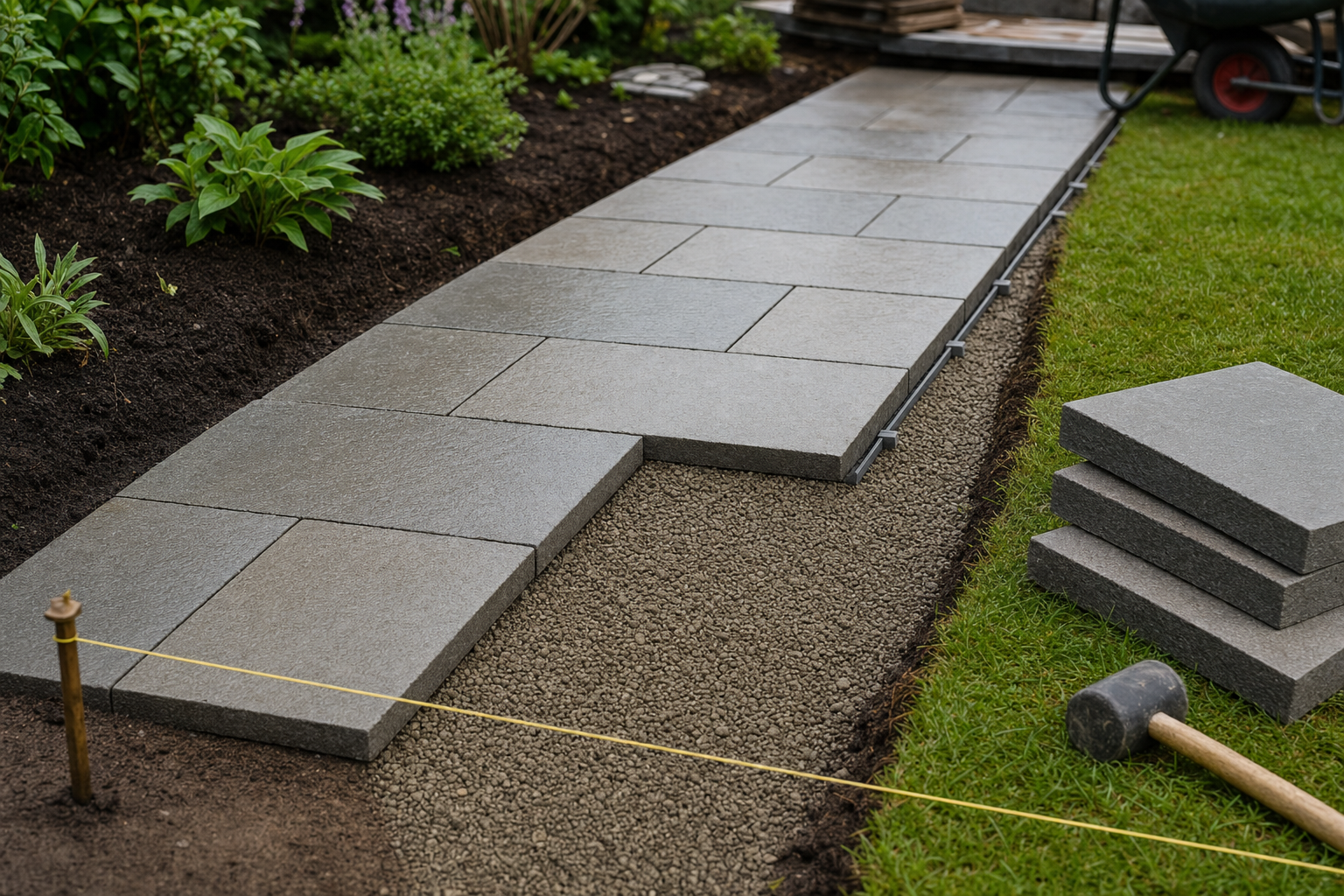
Surface, edging and drainage shape the result
Different paths suit different jobs. Paving can feel more formal and stable, blocks give design flexibility, and gravel can work well where a looser look is wanted. Whatever the finish, the sub-base preparation matters if you want to avoid settlement, and edge restraints help stop the surface from spreading or breaking down at the sides. We also plan for gradients, drainage and the transitions where the path meets doors, steps or another surface, because those meeting points are often where an otherwise decent path becomes awkward. The aim is a route that feels obvious to use and sturdy underfoot in the sort of weather Britain reliably remembers to provide.
Frequently asked questions
How wide should a garden path usually be?
That depends on where it goes and what uses it. A path to the shed that needs to take tools or garden equipment may want more width than a simple side route, and accessibility also matters. We look at everyday movement first so the finished path is comfortable rather than just technically present.
Which path surface is best for a garden?
There is no single best choice. Paving, block and gravel each have strengths depending on the look you want, the footing you need and how much upkeep you are willing to do. We compare the practical side as well as the appearance, because a path has to work in wet weather, not just on a bright day.
How do we handle slopes and awkward transitions?
Gradients, drainage and the point where the path meets steps, doors or another surface all need planning early. These details affect comfort and stability more than people expect. Sorting them in the layout stage helps avoid a path that technically reaches the destination but feels clumsy every time you use it.