
What you get with M&E Landscaping Driveways
Useful features can stay
We assess what still works before deciding what needs to go, which can save disruption.
Better zoning through the garden
Seating, storage, planting and movement areas are organised more clearly and practically.
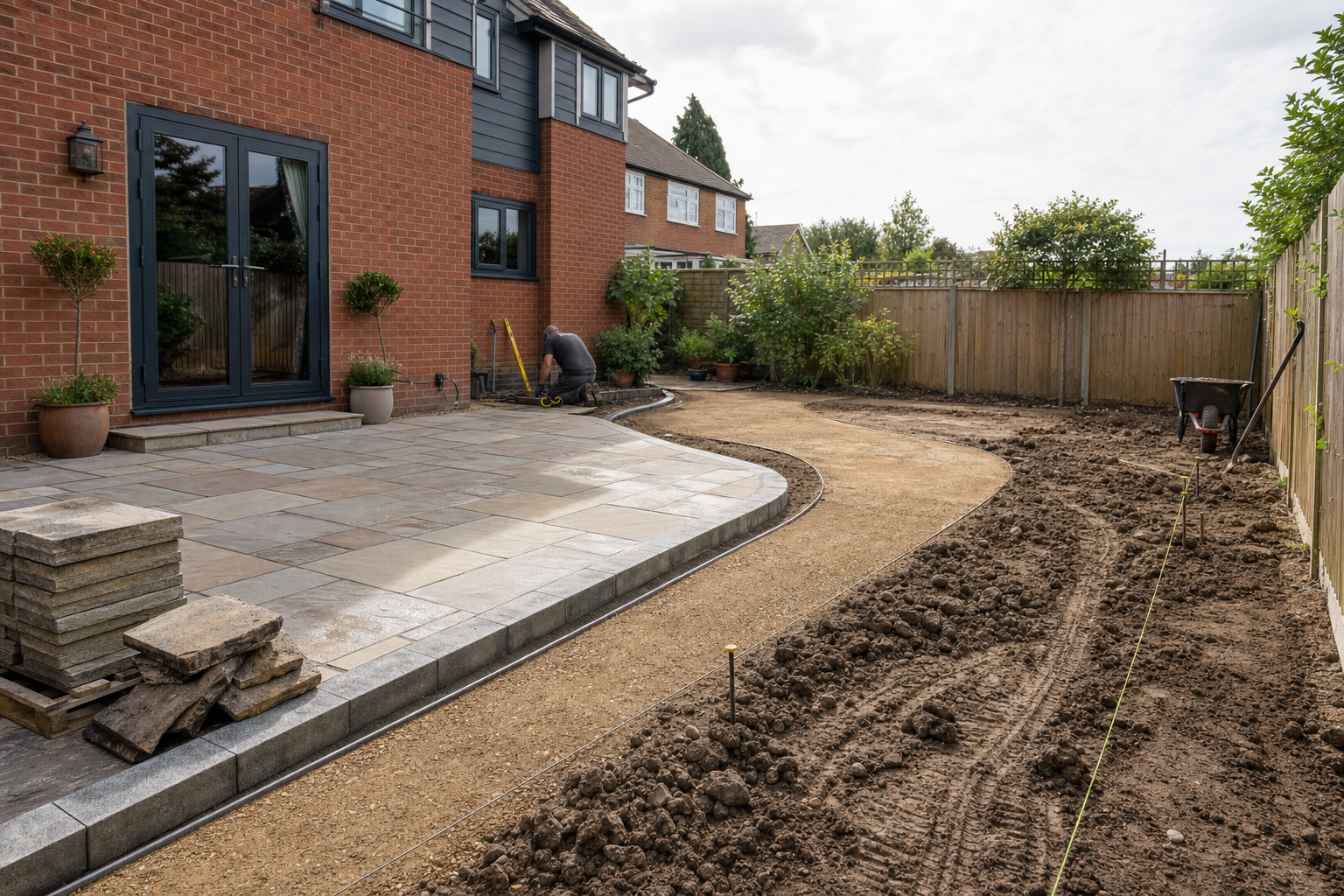
Work carried out in stages
Removal, groundwork and finishing elements are sequenced to keep the project coherent.
A renovation should solve problems, not just replace them
Garden renovations work best when they deal with the reasons the space stopped being enjoyable or easy to manage in the first place. It may be a tired layout, slippery routes, badly arranged levels, a patio that no longer suits the house, or simply a garden that has gathered bits and pieces without ever becoming a whole. A plan with M&E Landscaping Driveways starts by assessing the current layout, drainage, access and maintenance demands so we can see what is worth keeping and what is only taking up room. The aim is not to rip out useful features for the drama of it. It is to make the space behave better, look more settled and stop asking you to work around its bad habits.
Sequenced work keeps the job moving sensibly
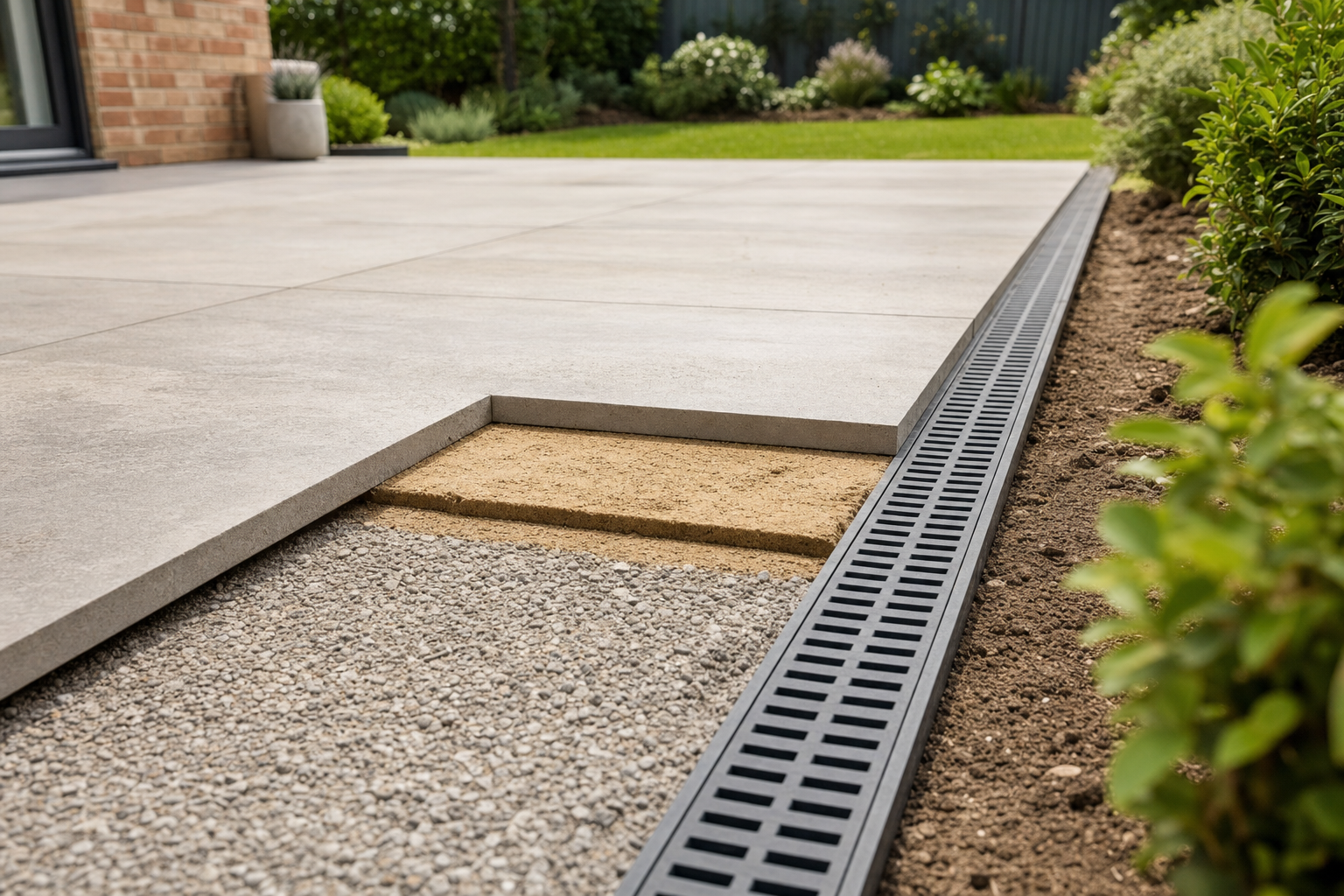
Most garden makeover projects need a logical order. Clearance and preparation often come first, followed by the groundwork and the structural features that define the space. From there, patios, paving, paths, sleepers, fencing or artificial grass can be added in a sequence that makes practical sense. Better zoning can then create clearer areas for seating, planting, play, storage or general movement. That joined-up approach matters because one decision affects the next: a path line changes the lawn edge, a new level affects drainage, and a patio size influences how the rest of the garden can function around it.
Frequently asked questions
Do we always need to clear the whole garden first?
Not always. Some gardens need a full reset, while others benefit more from keeping parts that still work and rebuilding around them. We assess the layout, condition and practical value of existing features before deciding what should stay, what should go and what is only pretending to be useful.
What usually comes first in a garden renovation?
Clearance and preparation often come first, because the ground, access and drainage need understanding before the visible features go in. After that, structural elements such as paving, patios, paths or sleeper work are normally sequenced in a way that supports the rest of the layout rather than blocking it.
Can one project include patios, paths and fencing together?
Yes, that is often the most sensible approach if the garden needs several changes. Combining features in one planned renovation can improve the overall layout and avoid the patchwork effect of separate jobs done at different times, each working around the last one rather than with it.