
What you get with M&E Landscaping Driveways
Planned around parking
We work out vehicle numbers, turning space and entry width before the final shape is set.
Finish choices explained plainly
Block paving, resin, tarmac and gravel each have trade-offs, and we talk you through them.
Preparation before appearance
The sub-base, edging and drainage are sorted properly before the surface goes down.
A driveway should match the way you park
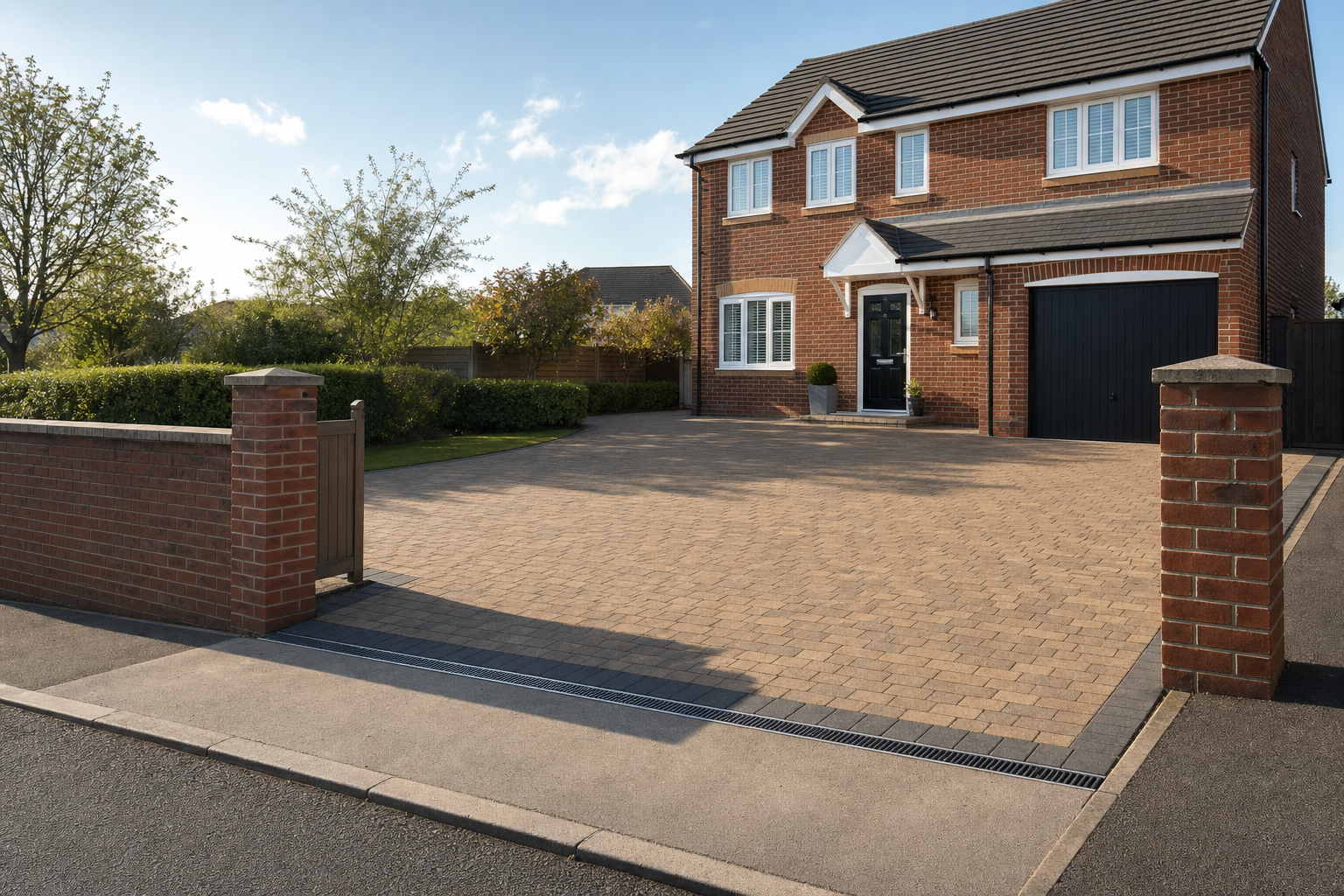
A new driveway is not just a surface choice. It needs to suit how many vehicles you have, how you get in and out, whether anyone has to reverse into the road, and how much room is left once doors are open and bins still need somewhere sensible to stand. A plan with M&E Landscaping Driveways starts with those ordinary details, because they decide far more than brochures do. We look at available space, entrance width, turning room, borders, steps and links to paths, then help you compare block paving, resin, tarmac and gravel in plain terms so the finish fits the property, the daily use and the amount of upkeep you actually want.
The base, levels and drainage do the real work
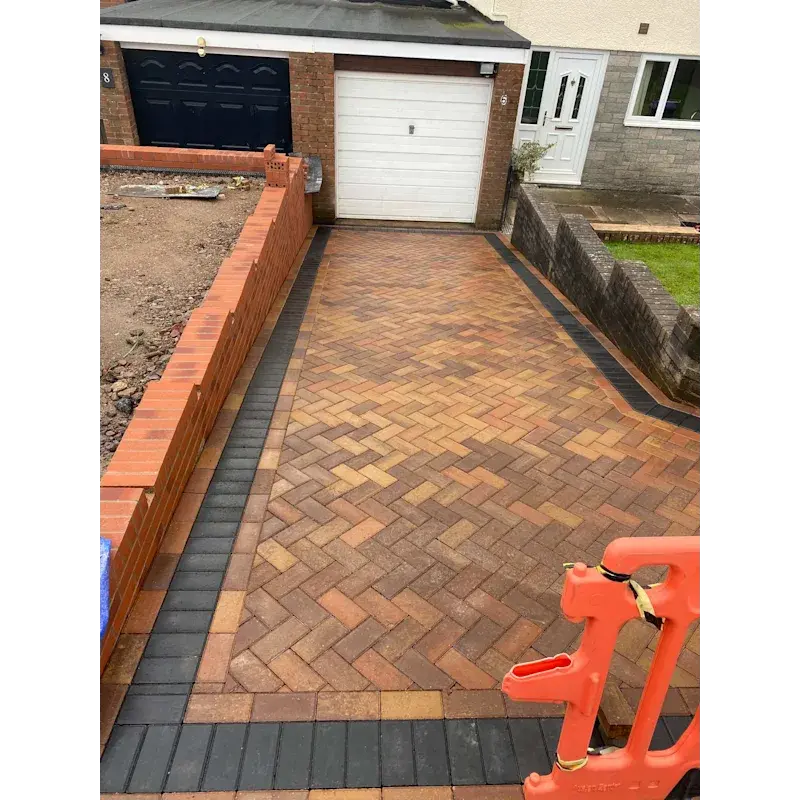
What keeps a driveway stable is mostly the part you do not see. We clear the site, excavate to the right depth, set formation levels, build and compact the sub-base, then prepare for the chosen finish. That stage is where gradients, surface water, edging and connections to paths really matter. If the fall is wrong, puddles sit where you least want them. If the edging is weak, the surface starts to move. In Newport, many properties also need a sensible look at steps, sloping entrances or narrow fronts before the layout is fixed, so the finished drive feels usable rather than merely new.
Frequently asked questions
How do we help you choose a driveway finish?
We start with how you use the drive rather than which sample board looks smartest on day one. Parking numbers, turning room, sweeping, weed control, edging detail and the style of the property all help narrow down whether block paving, resin, tarmac or gravel is the better fit.
Does every new driveway need full excavation?
A new driveway usually needs proper excavation and rebuilding to create the right depth for a stable base, reliable levels and drainage. The exact amount depends on the existing surface and ground conditions, but guessing at the prep is usually what causes movement and water trouble later.
What else matters apart from the surface itself?
Entrance width, turning space, steps, borders, path connections, gradients and drainage all affect how well a driveway works once cars are actually using it. Those details are easier to sort during planning than after the surface is already down and the awkward bit is still awkward.